

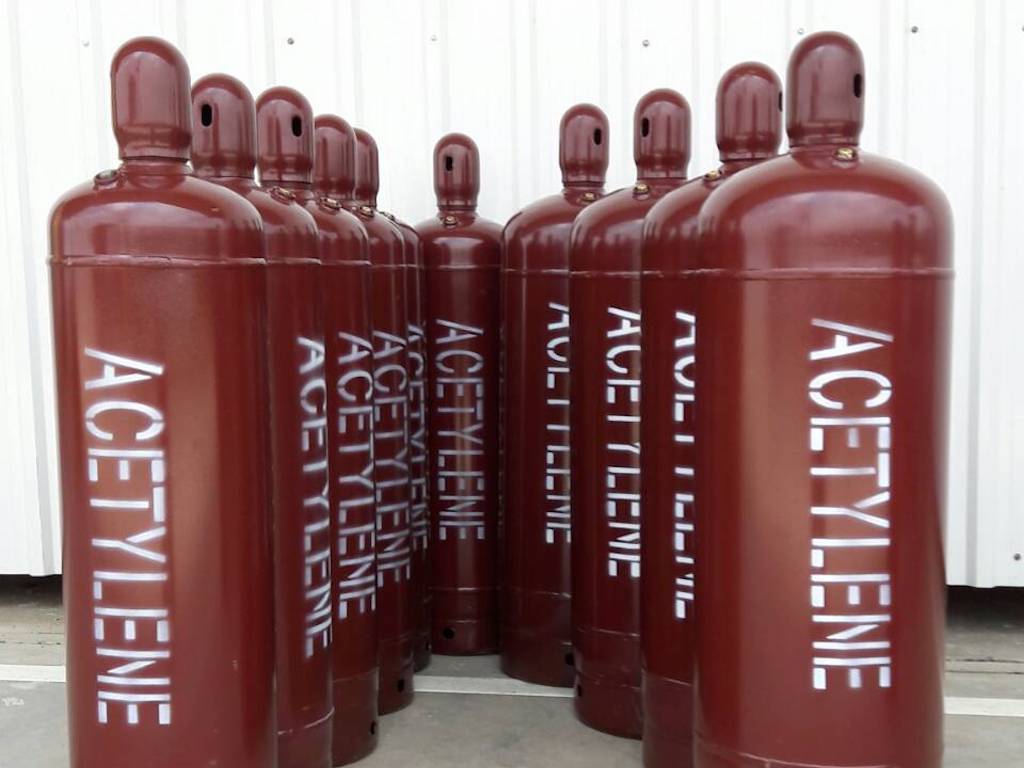
Acetylene
C₂H₂
Premium dissolved acetylene gas manufactured to the highest standards. Exceptional efficiency with the lowest oxygen requirement for complete combustion.
Physical & Chemical Properties
| Property | Value |
|---|---|
| Molecular Formula | C₂H₂ |
| Molecular Weight | 26.038 |
| Boiling Point | -75°C (at 124 kPa) |
| Melting Point | -82°C (at 17.8 PSIA) |
| Specific Volume | 0.903 m³/kg (at 15°C, 101.3 kPa) |
| Flammable Limits in Air | 2.5 - 5.0% by volume |
| Autoignition Temperature | 305°C |
| Solubility in Water | 0.3g / 100ml H₂O |
| Appearance | Colorless gas |
| Odor | Ether-like (garlic-like when impure) |
The Science Behind the Flame
Acetylene is produced through the controlled reaction of calcium carbide (CaC₂) with water. This exothermic reaction releases acetylene gas, which is then carefully purified to remove contaminants including phosphine, hydrogen sulfide, ammonia, and moisture.
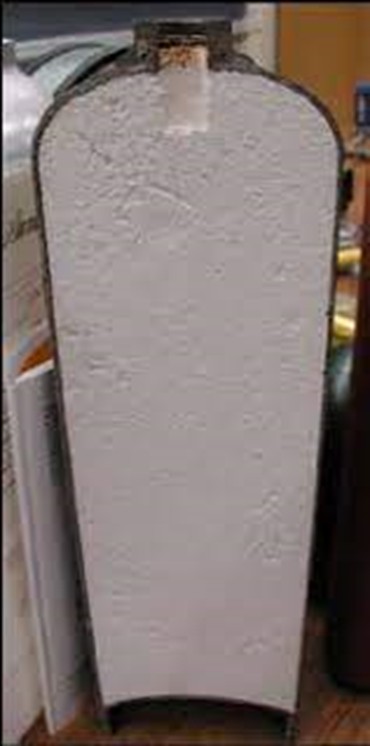
The purified gas is dissolved into a solvent (acetone or DMF) absorbed by porous mass within the cylinder. This unique storage method ensures safe handling and stable supply.
Dissolved Gas Storage
Unlike other gases, acetylene is dissolved in solvent within porous-material-packed cylinders for safe storage and transport.
Solvent Options
Acetone
Standard solvent for individual cylinders. Widely used and cost-effective. Suitable for most welding and cutting applications.
DMF (Dimethylformamide)
Preferred for cylinder packs and high-purity applications. Enables higher withdrawal rates with lower contamination risk. Ideal for precision welding.
⚠ Warning: Never mix acetone and DMF solvents in the same cylinder.
Pressure vs Temperature
| Temperature | Acetone (bar) | DMF (bar) |
|---|---|---|
| 40°C | 21 | 23 |
| 30°C | 19 | 21 |
| 20°C | 15 | 17 |
| 15°C | 14 | 16 |
Note: Pressure gauges only indicate released gas pressure, not total cylinder content. Weigh cylinders for accurate quantity measurement.
Industrial Applications
When mixed with oxygen, acetylene produces the hottest flame of any fuel gas—reaching up to 3,100°C.
Oxy-Fuel Welding
The only fuel gas capable of welding steel. Produces flame temperatures up to 3,100°C when mixed with oxygen.
Metal Cutting
Fastest pre-heating time, highest cutting speeds, and rapid cut initiation with reduced oxygen consumption.
Heat Treatment
Ideal for brazing, soldering, and thermal spraying applications requiring precise temperature control.
Chemical Synthesis
Essential feedstock for producing vinyl chloride, acrylonitrile, and various organic compounds.
Key Advantages
Highest flame temperature of any fuel gas
Lowest oxygen-to-fuel ratio for combustion
Lighter than air (safe for underground use)

Engineered for Safety
Our acetylene cylinders are specifically designed for the unique storage requirements of dissolved acetylene. Each cylinder contains a porous mass (calcium silicate or fiberglass) saturated with solvent.
- ✓ Maroon color coding per international standards
- ✓ Fusible plugs for thermal protection
- ✓ Left-hand thread valve connections
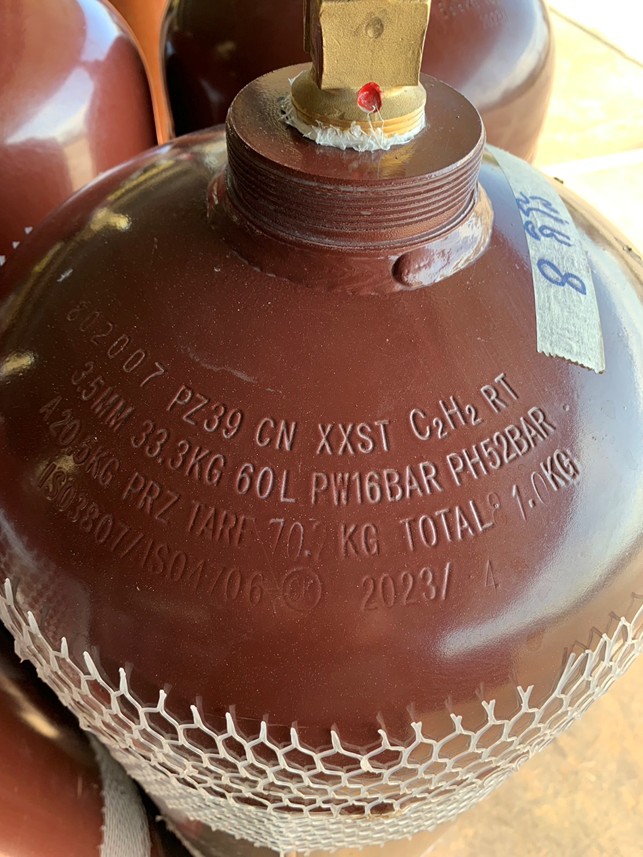
- ✓ Tare weight stamped for content verification
 Safety Information
 Handle with Care
Acetylene is a highly flammable gas. Proper handling and storage procedures must be followed at all times.
Hazards
- ⚠ Extremely flammable - forms explosive mixtures with air
- ⚠ Asphyxiant at high concentrations
- ⚠ Unstable above 100 kPa pressure
- ⚠ Reacts dangerously with copper, silver, and mercury
Precautions
- ✓ Store in well-ventilated areas away from oxidizers
- ✓ Never exceed 100 kPa operating pressure
- ✓ Use only approved regulators and equipment
- ✓ Keep cylinders upright and secured
- ✓ Close valves when not in use
- ✓ Regularly inspect for leaks with soapy water
Emergency Procedures
Materials to Avoid
Never use with: Unalloyed copper (>65% Cu), silver, mercury, or their compounds. Acetylene forms explosive acetylides with these metals.